
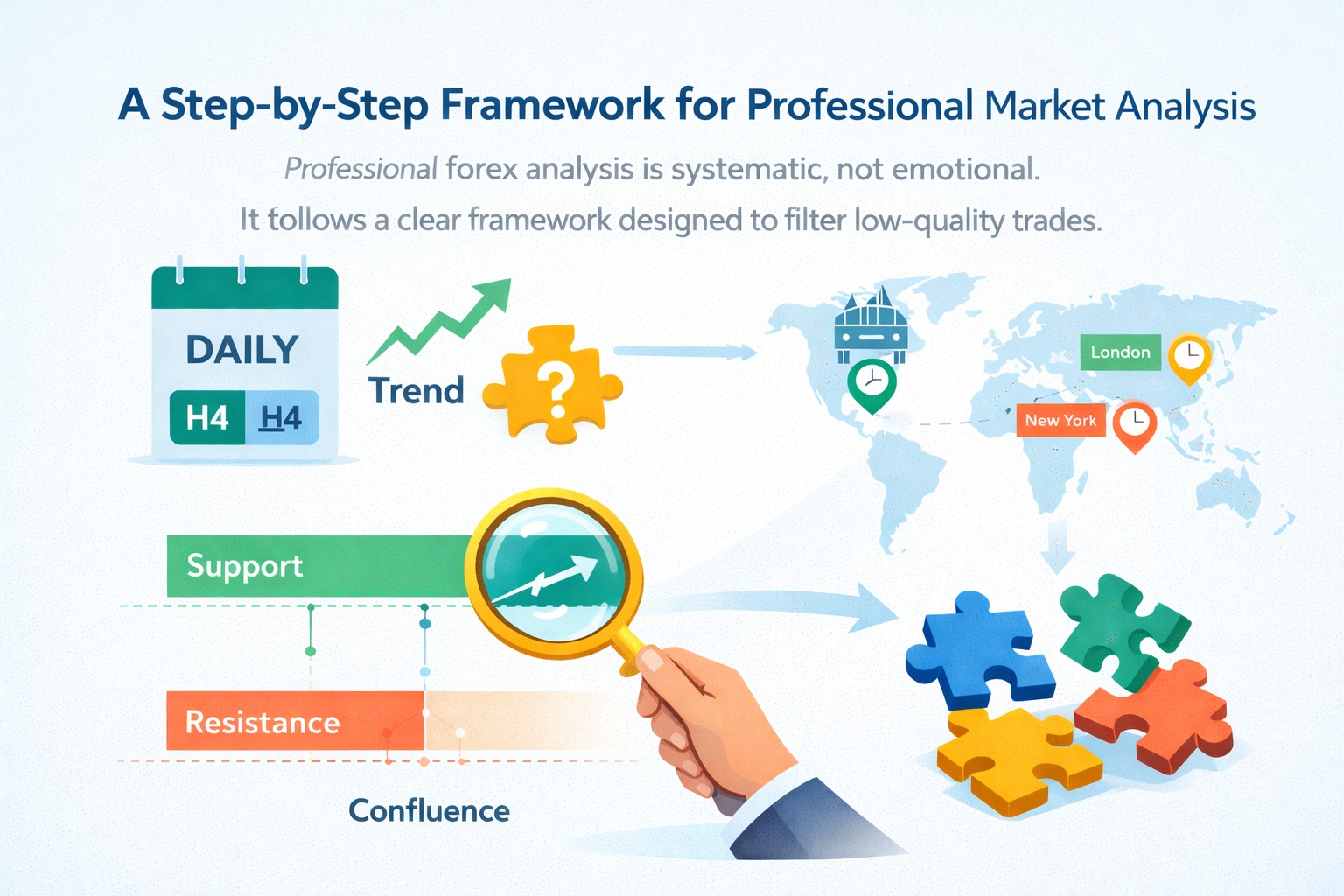
Professional forex analysis is systematic, structured, and rule-based — not emotional. Experienced traders follow a clear analytical framework designed to filter out low-quality trades and focus only on high-probability setups.
Step 1: Define the Higher-Timeframe Bias
All professional analysis begins on higher timeframes such as the Daily or H4 chart. This step reveals the true market direction and prevents traders from trading against institutional flow.
Key questions professionals ask:
- Is the market trending or consolidating?
- Is price making higher highs or lower lows?
- Where is price positioned relative to key historical levels?
Without a higher-timeframe bias, lower-timeframe trades become random and inconsistent.
Step 2: Identify Key Market Levels
Once directional bias is clear, professional traders mark critical price zones where institutions are likely active.
These levels typically include:
- Major support and resistance zones
- Previous daily or weekly highs and lows
- Strong rejection or reaction areas
These levels are not random — they represent areas where significant buying or selling pressure has occurred in the past.
Step 3: Apply Session-Based Timing
Professional traders understand that timing is as important as direction. Not all trading hours offer the same probability.
- London Session often sets the market direction
- New York Session typically confirms or reverses that move
Trading outside active sessions often leads to low volatility, false signals, and reduced follow-through.
Step 4: Look for Confluence, Not Indicators
Professionals do not rely on a single indicator or signal. Instead, they look for confluence — multiple factors aligning at the same time.
Common confluence factors include:
- Market structure alignment with higher-timeframe bias
- Price reaction at a predefined key level
- Confirmation during an active trading session
Indicators are treated as supporting tools, not decision-makers. Price action remains the primary source of truth.
Final Thoughts
Professional market analysis is about removing uncertainty, not predicting the future.
The objective is not to trade more frequently — the objective is to trade better, cleaner, and with higher probability.

