
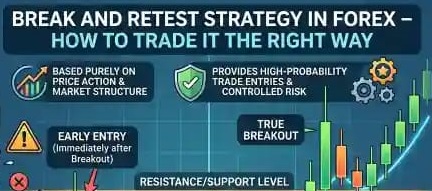
The Break and Retest strategy is widely used in forex trading because it is based purely on price action and market structure. When applied correctly, it can provide high-probability trade entries with controlled risk. However, many traders reduce its effectiveness by entering too early — immediately after a breakout — without waiting for confirmation.
Understanding the difference between a true breakout and a false move is what separates disciplined traders from impulsive ones.
What Defines a Valid Breakout
A breakout is not simply a candle closing above resistance or below support. For a move to be considered strong and sustainable, it should show clear signs of commitment from the market.
Characteristics of a Strong Breakout
- Clear directional momentum
- Expansion in volatility
- A visible shift in market structure
- Increase in volume (when volume data is available)
When these elements align, the breakout is more likely to continue in the direction of the move.
What Is a False Breakout
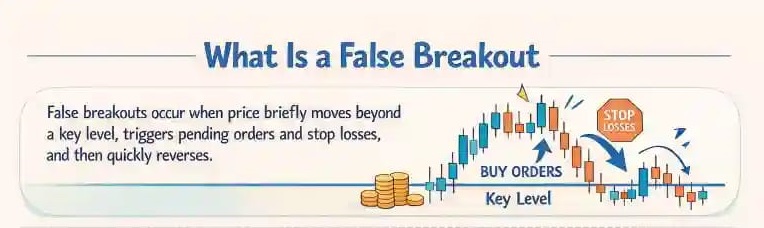
False breakouts occur when price briefly moves beyond a key level, triggers pending orders and stop losses, and then quickly reverses. These moves often represent liquidity collection rather than genuine trend continuation.
Traders who enter immediately at the breakout level without confirmation are more vulnerable to these traps.
Why the Retest Phase Matters
After a confirmed breakout, price frequently returns to the broken level. This phase is known as the retest. Instead of chasing price during the breakout, experienced traders wait for this pullback.

The retest provides a more controlled and structured entry point.
What Professionals Look for During the Retest
- Clear rejection patterns at the previous support or resistance level
- Market structure confirmation on lower timeframes
- Renewed momentum in the breakout direction
Entering at the retest often allows for:
- Tighter stop-loss placement
- Improved risk-to-reward ratios
- Reduced emotional decision-making
This approach focuses on confirmation rather than speed.
The Market Cycle Behind Break and Retest
Financial markets tend to move in recognizable phases. The Break and Retest model fits naturally within this cycle:
- Accumulation
- Breakout
- Retest
- Expansion
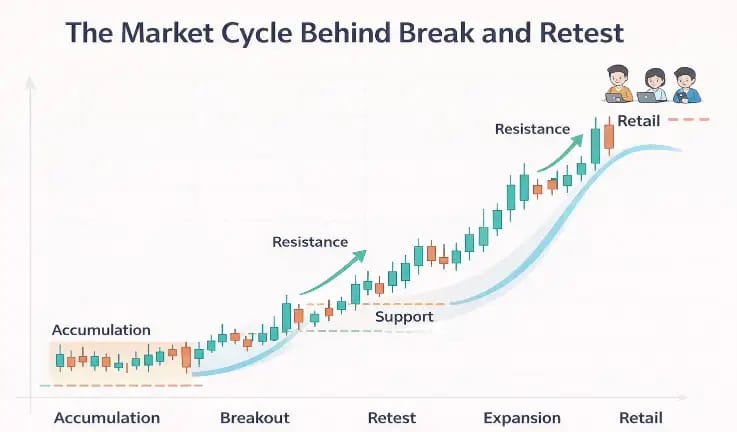
Retail traders commonly enter during the breakout phase, driven by momentum and urgency. More experienced traders often wait for the retest phase, where structure is clearer and probability improves.
Precision Over Speed
In forex trading, being first is rarely as important as being precise. Waiting for confirmation through a proper retest can significantly improve trade quality and risk management.
The Break and Retest strategy rewards patience, structure awareness, and disciplined execution — key elements for long-term consistency in the market.
Conclusion
The Break and Retest strategy remains one of the most dependable price action approaches in forex trading when executed with patience. Instead of chasing breakouts, waiting for confirmation through a structured retest can improve entry timing, risk control, and overall trade consistency. In trading, precision consistently outperforms impatience.

