

Professional traders do not open their charts on Monday and start clicking buy or sell. They prepare in advance. A structured weekly analysis creates clarity, reduces emotional trading, and helps you focus only on high-quality setups.
Building a weekly market bias does not mean predicting the future. It means preparing scenarios based on price action, key levels, and upcoming economic events.
Why a Weekly Bias Matters
Without a clear plan, traders often:
- Overtrade on lower timeframes
- Chase impulsive price moves
- React emotionally to news
- Change direction frequently
A weekly bias provides structure. It tells you what you are looking for before the market opens, so you are reacting with logic instead of emotion.
1.Review the Previous Week
Start your analysis by understanding what happened last week. This gives context for the new trading week.
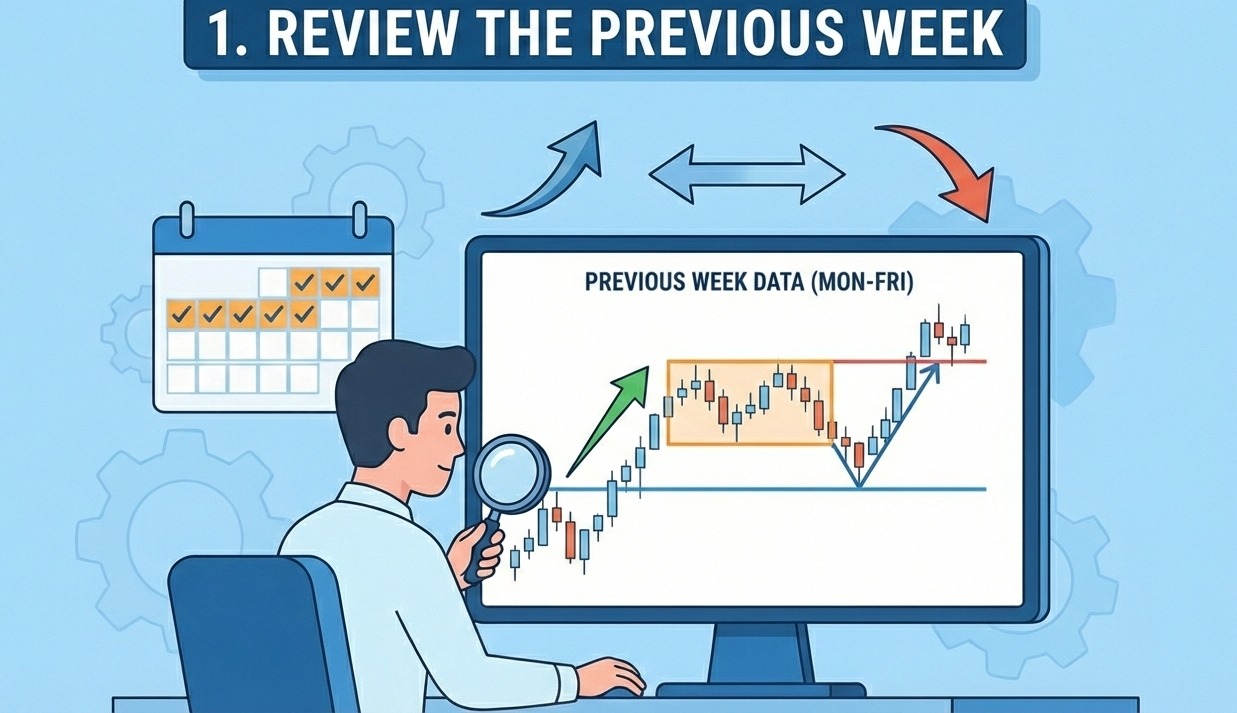
Ask yourself:
- Did the market trend strongly or move sideways?
- Where did the strongest moves occur?
- Were key support or resistance levels respected?
- Did price break important structure levels?
If the market was trending, momentum may continue. If it consolidated, a breakout could be coming. Context is everything.
Step 2: Mark Major Weekly Levels
Once you understand last week’s behavior, mark important price levels on your chart.
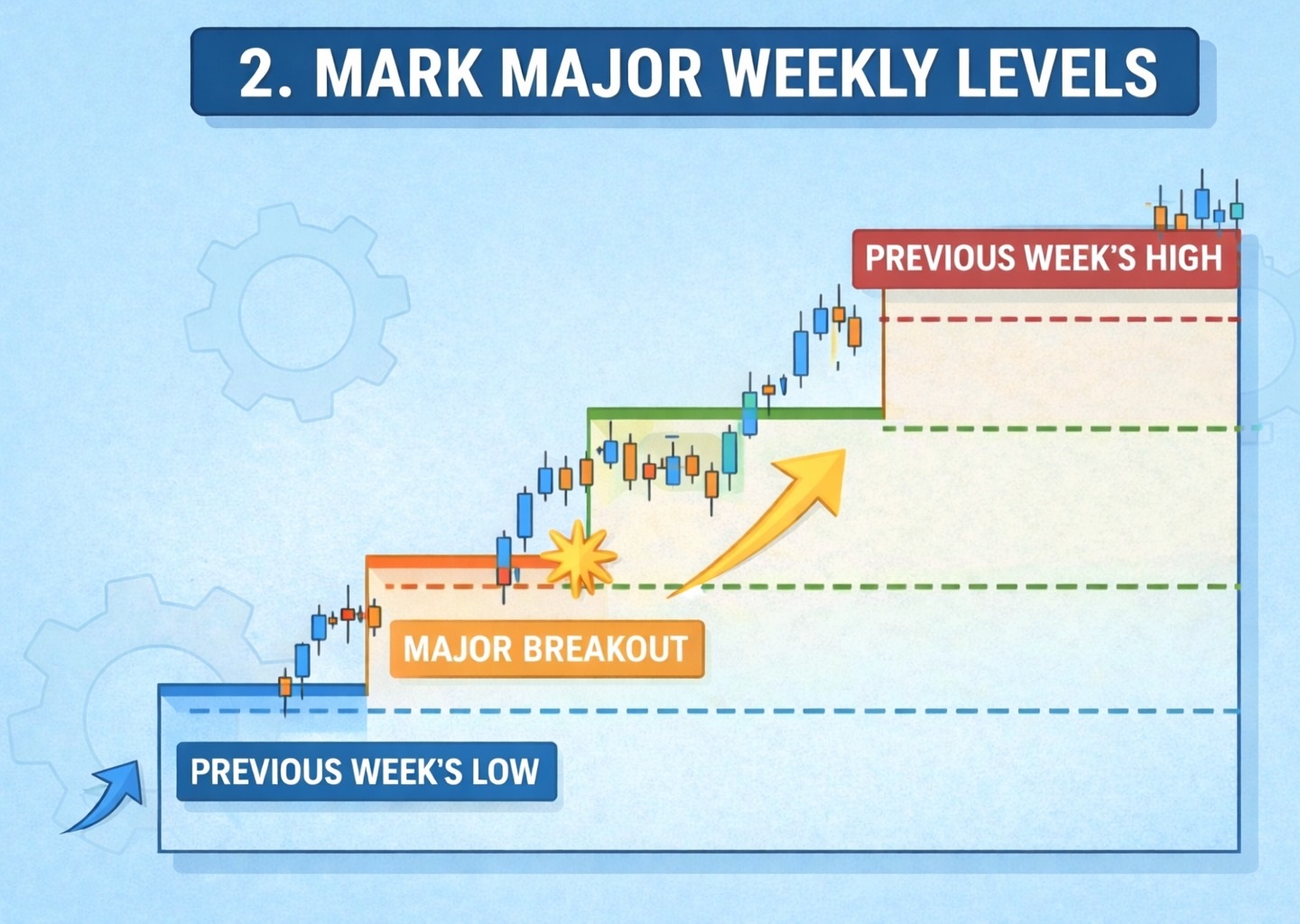
Focus on:
- Previous week’s high
- Previous week’s low
- Strong rejection zones
- Major breakout levels
These levels often act as magnets for price during the new week. Many institutional traders watch the same zones, which increases their importance.
Keep your chart clean. Only mark levels that clearly influenced price.
Step 3: Check the Economic Calendar
Technical analysis alone is not enough. High-impact news events can significantly increase volatility.
Before the week begins, identify:
- Interest rate decisions
- CPI (inflation) data releases
- Employment reports (such as NFP)
- Central bank speeches
Mark these events on your trading plan. Strong fundamental catalysts can either confirm your technical bias or invalidate it.
For example, if you are bullish on a currency pair but a major negative economic report is scheduled, you must stay cautious.
Step 4: Create a Conditional Plan
Professional traders do not predict — they prepare scenarios.

Instead of saying, “The market will go up,” say:
- If price breaks above the weekly high, I will look for bullish continuation setups.
- If price rejects the weekly high strongly, I will look for short-term retracements.
- If price consolidates, I will wait for breakout confirmation.
This approach keeps you flexible. You are not emotionally attached to one direction. You are simply responding to what the market shows.
Step 5: Define Your Risk Parameters
Before the week starts, define your risk limits. Professionals measure risk before thinking about profit.

Decide in advance:
- Your maximum weekly risk percentage
- The maximum number of trades you will take
- Your risk per trade
This prevents revenge trading and protects your capital during volatile periods.
For example, if your weekly risk limit is 4%, once that level is reached, you stop trading for the week. Discipline protects consistency.
Putting It All Together
A structured weekly preparation routine might look like this:
- Saturday: Review charts and analyze the previous week.
- Sunday: Mark levels, check economic events, and create scenarios.
- Monday onward: Execute only when your conditions are met.
When preparation is strong, execution becomes calm.
Final Thought
Consistency in trading comes from structure, not from prediction. A weekly bias is not about being right every time — it is about having a clear plan before the market moves.
Saturday is for building your edge.
Sunday is for preparing your execution.
The rest of the week is for disciplined action.
For traders who want to strengthen their chart analysis skills, read our detailed guide on Multi-Timeframe Confluence Trading Explained to understand how aligning higher and lower timeframes can improve entry precision.

